Thursday, 14 March 2019

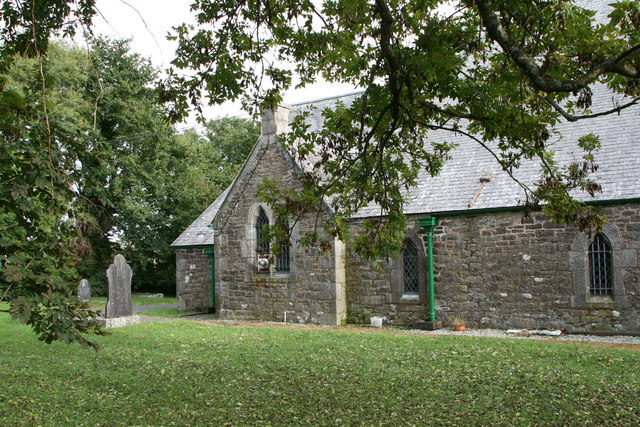
Unveiling of World War One memorial at Penponds Church

As part of our project Heart of Conflict, we've been looking at local World War One history. Now the centenary of the conflict has passed, we're looking at the years immediately after the war. Many memorials were unveiled then, as people remembered all those who died.
In Penponds, the War Memorial is unusual in that it is in the fabric of the church i.e. the porch, rather than outside.
It was designed by Canon James Sims Carah who was vicar of the parish from 1896 to 1935. Canon Carah, a local man, was responsible for the impressive oak carvings, windows and bench ends in the church today. Originally the building, consecrated in 1854, had a stark and plain granite interior.
Canon Carah, who grew up in Praze, had a vision of something very different. He worked tirelessly to create a building with a splendid fabric and interior, very much in a High Church tradition.
The porch, dedicated in December 1922, was part of this. Canon Carah explained at the time.
The idea was to turn ‘the present porch, as far as possible, into a sort of chapel commemorating all those who gave their lives for us,” he told the local paper.   A total of £300, a large sum at the time, was raised to create it - the equivalent of about £10,000 today.
It was intended to commemorate not only men from Penponds who died in the conflict, but also those who died who were connected in any way with the church and congregation. There are names of men who were studying at Camborne School of Mines, as well as those from local families.
The whole of the main porch was relined in granite in which were inserted four panels of Swedish marble, inscribed with the names of those who died.
Above the marble are carved panels of polyphant stone (also known as ‘Cornish soapstone’). One panel is called ‘The Great Sacrifice’ and has the inscription ‘No man has greater love than this’.
The other shows St Edward, St George and St Michael, said to be the guardian saints of soldiers.
On the roof in gold letters there are the words ‘Lord who dost our souls redeem, Grant blessed Requiem.’  All the work was done locally – apart from the stone carved panels which were sent away to be completed.
A new gate to the porch was made of wrought iron and a new lamp was donated by a Miss Holman (sadly this has since been stolen).  The Holmans were a rich and influential family locally at the time.

Wednesday, 6 March 2019

A glimpse of Cornwall in the National Poetry Library

I'd never been to the National Poetry Library and didn't even know it was in the Royal Festival Hall. But it's worth a visit, particularly to see the current exhibition - a recreation of W. S. Graham's study, the poet who was based in west Cornwall and died in 1986.  Irritatingly, the exhibition is short of any biographical detail or explanation so I'm not quite sure where W S Graham lived (though a Google search says Madron).
But the study that's been recreated looks out on to Gurnard's Head, quite a view. And there is a lovely poem in memory of his friend, the artist Peter Lanyon (killed in a gliding accident), on the wall.
More here.
I called today, Peter, and you were away.
I look out over Botallack and over Ding
Dong and Levant and over the jasper sea.


Tuesday, 5 March 2019

St Piran’s Day in Hammersmith

Fantastic to see the Cornish flag flying in Hammersmith this morning. This is the very flag that travelled with Camborne Youth Band on their historic trip to the World War One battlefields in France and Belgium last summer.
A huge thank you to the St Peter's Square flag association for hoisting it.

--
Susan Roberts
Director
Bridging Arts
www.bridging-arts.com
Tel: 07772 128 014

Monday, 4 March 2019

Newlyn artist and horses in World War One


A rare opportunity to see paintings by Alfred Munnings at the National Army Museum.  Most of these paintings of men and horses in action in World War One are usually in Canada, in the Canadian War Museum. Munnings was an official war artist, painting the Canadian Expeditionary Force in action.
He went out to the Western Front late in 1917. In the years before that, he had been in Cornwall, one of the Newlyn colony of artists. The then vicar of St Hilary, Bernard Walke, talks fondly of him in his memoirs (published in the early 1930s).
The colours of Munning's paintings are bright and vibrant, very much the palette of the Newlyn-based artists painting scenes of Cornwall and the sea. One of his war paintings in the collection is of a cow (in the Jura).  Munnings, famed for his studies of horses, remarks that he had once bought a cow in Cornwall to study as a model and it had proved one of the best investments he had ever made.


We're hoping to continue our project, Heart of Conflict, in Cornwall marking the centenary of the end of World War One. We're waiting to hear if we have funding to take the work further.

Friday, 1 March 2019

British Sari Story Education Pack

In 2019, we'll be working with schools in the UK and in France - so we've been taking a look at the various Education Packs that we've produced over the years. The British Sari Story Education Pack has always proved very popular. It's still fresh and full of ideas.  Click here to read more.
Our project, The British Sari Story , looked at the sari in Britain in 2007, the 60th year after Indian independence. We ran a competition for young designers to create new patterns for this iconic Asian garment that reflected contemporary life in this country. We staged an exhibition, national competition and educational workshops exploring traditions, heritage and identity.  Click here to find out more.

Wednesday, 27 February 2019

International Food Day in Hammersmith

A great day yesterday (Tuesday 26 February 2019) at the Elders’ Club at the Masbro Centre, Hammersmith.  People brought in their traditional dishes and talked about the background to the recipes. So many were taught them by their mothers – from the Caribbean to Ghana and Bangladesh and southern India.
We’re hoping to put together a book of these recipes, with photographs of the cooks and information about the history of the dishes.


Friday, 15 February 2019

War Memorial at Penponds Church, near Camborne

Penponds churchAs part of Heart of Conflict,our project looking at World War One in Cornwall, we studied war memorials and graves of men who had been buried back home. Penponds Church near Camborne had very close links with Camborne School of Mines and the war memorial there remembers many young men who were not born locally - but had very strong links with the parish. Click here to download a guide to Penponds War Dead, compiled by a current parishioner, Craig Carey-Clinch.
The war memorial was created by Canon James Sims Carah, vicar of Penponds from 1896-1935 with the help of local people. It was unveiled by Dr William Blackwood, a veteran of WW1 who had led a party of St Johns Ambulance men from Dolcoath mine out to the Front in 1914.
Cornish miners played a vital role in the first part of the war, digging out under enemy lines to plant explosives. Many died.  One of the School of Mines students was Cecil Calvert who was recommended for a medal for his bravery in digging out a trapped man from a tunnel with his bare hands to avoid being heard by the German troops above. Tragically he died in another fearless rescue attempt before receiving the award.  He was, though, commemorated in Deeds That Thrilled the Empire, a book published after the war to boost morale at home and celebrate the heroism of British forces.

Support Us

Bridging Arts depends on grants and charitable donations. To support us, click here.