Wednesday, 12 October 2016

Monday, 10 October 2016
Men as Machines - World War One

I also didn't realise that Nevinson had worked as an ambulance driver on the Front until ill health put a stop to that.
We're featuring men from the Royal Army Medical Corps in our exhibition, Heart of Conflict opening at the Royal Cornwall Museum, Truro, in December.
La Mitrailleuse was very highly praised at the time. Fellow artist Walter Sickert said the painting 'will probably remain the most authoritative and concentrated utterance on the war in the history of painting.' However - Nevinson didn't think so. His later paintings of WW1 are far more realistic. He thought he had to tell the 'truth'. Odd to say now that these later paintings are more graphic in a way - but lack the power of the abstract or Cubist La Mitrailleuse. I'm no fan of Cubism but it seems true in this case.


Thursday, 6 October 2016
In search of Miss W M Bennett

Good to see this piece in the Cornishman - we're trying to track down information about Miss W M Bennett who lived in Penzance, Cornwall, during World War 1 as part of our work on Heart of Conflict. Click here to read the article.
We're hoping some relatives or descendants will read the article.
Photo by A.W. Jordan/courtesy of the Royal Cornwall Museum, Truro.
Wednesday, 5 October 2016
Unveiling Cookham War Memorial
 Still on World War One and related topics - Stanley Spencer famously painted the unveiling of the war memorial in his village, Cookham. This was particularly poignant for him as his adored brother was one of the names engraved on it.
Notably - in his painting, he fails to include the military personnel or the grieving families who were present at the ceremony (as a photo from the time shows).

Tuesday, 4 October 2016
Artist Stanley Spencer and the Royal Army Medical Corps

Had forgotten that artist Stanley Spencer had served in the Royal Army Medical Corps (RAMC) in World War One (we're still working on background for our exhibition Heart of Conflict and a number of stories we feature involve men who worked in the RAMC). His paintings and watercolours give a vivid impression of what it was like to work as a stretcher bearer. Here mules are bringing the wounded into a dressing station in Macedonia. Something about the limpness of the bodies on the stretchers is chilling.
Monday, 3 October 2016
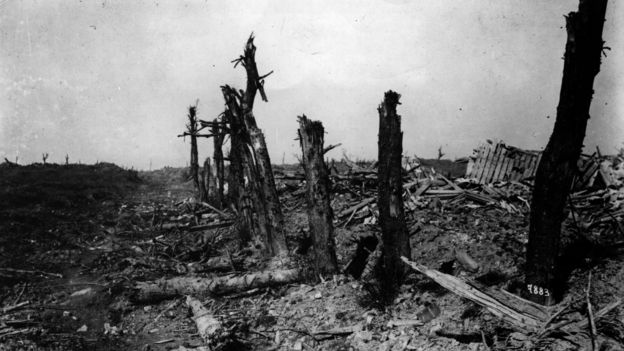
Memoirs of an Infantry Officer
But some of his observations are chilling. This for example of a night in the hospital with a mortally wounded man in the bed opposite (shielded by screens) after the carnage at Mametz wood.
"Someone called Dicky was on his mind, and he kept crying out to Dicky. 'Don't go out, Dicky, they snipe like hell!' And then. 'Curse the Wood.... Dicky, you fool, don't go out!'....All the horror of the Somme attacks was in that raving; all the darkness and the dreadful daylight...."
Earlier he comments on press coverage at the time:
"A London editor driving along the road in a staff car would have remarked that the spirit of the troops was amazing. And so it was. But somehow the newspaper men always kept the horrifying realities of the War out of their articles, for it was unpatriotic to be bitter, and the dead were assumed to be gloriously happy."
Sunday, 2 October 2016
No reason to stay ashore...

A great quote from Van Gogh to start this Sunday.
These fishermen (photo from the Royal Cornwall Museum) were from Porthleven and all over 70 when they took to sea in World War One due to a shortage of local men.
More about Cornwall during WW1 in our exhibition Heart of Conflict at the Royal Cornwall Museum in Truro, opening in December 2016.
Subscribe to:
Posts (Atom)
